If you’ve ever applied self tanner and noticed that unmistakable smell a few hours later, you’re not imagining it. For years, self tanning had a reputation and not a great one.
The good news? That smell isn’t a given anymore. Modern self tanners have evolved dramatically, and there’s real science behind why they smell better now.
Let’s break it down.
Why Did Old Self Tanners Smell So Bad?
The scent people associate with self tanning isn’t actually a fragrance issue, it’s a chemical reaction.
Most self tanners use DHA (dihydroxyacetone), the active ingredient that creates a tan without sun exposure. DHA reacts with amino acids in the outer layer of your skin, producing a bronzed colour.
This reaction, known as the Maillard reaction also creates by-products. Those by-products are responsible for the strong, biscuity or metallic smell that older self tanning products were known for.
Early self tanning formulas:
-
Relied on high concentrations of DHA
-
Offered little skin hydration
-
Didn’t support the skin barrier
-
Allowed the tanning reaction to intensify unchecked
The result? A smell that developed over time and worsened as your body heat increased.

Why Fragrance Didn’t Fix the Smell
For years, brands tried to mask the self tan smell with perfume.
The problem is that fragrance doesn’t stop the DHA reaction, it only covers it temporarily. As the tan develops, the chemical scent pushes through, often mixing with the fragrance and making it even more noticeable.
That’s why many people say self tanner smells fine at first… then smells worse hours later.

How Modern Self Tanners Smell Better
The biggest shift in self tanning came when brands began treating it like skin care, not makeup.
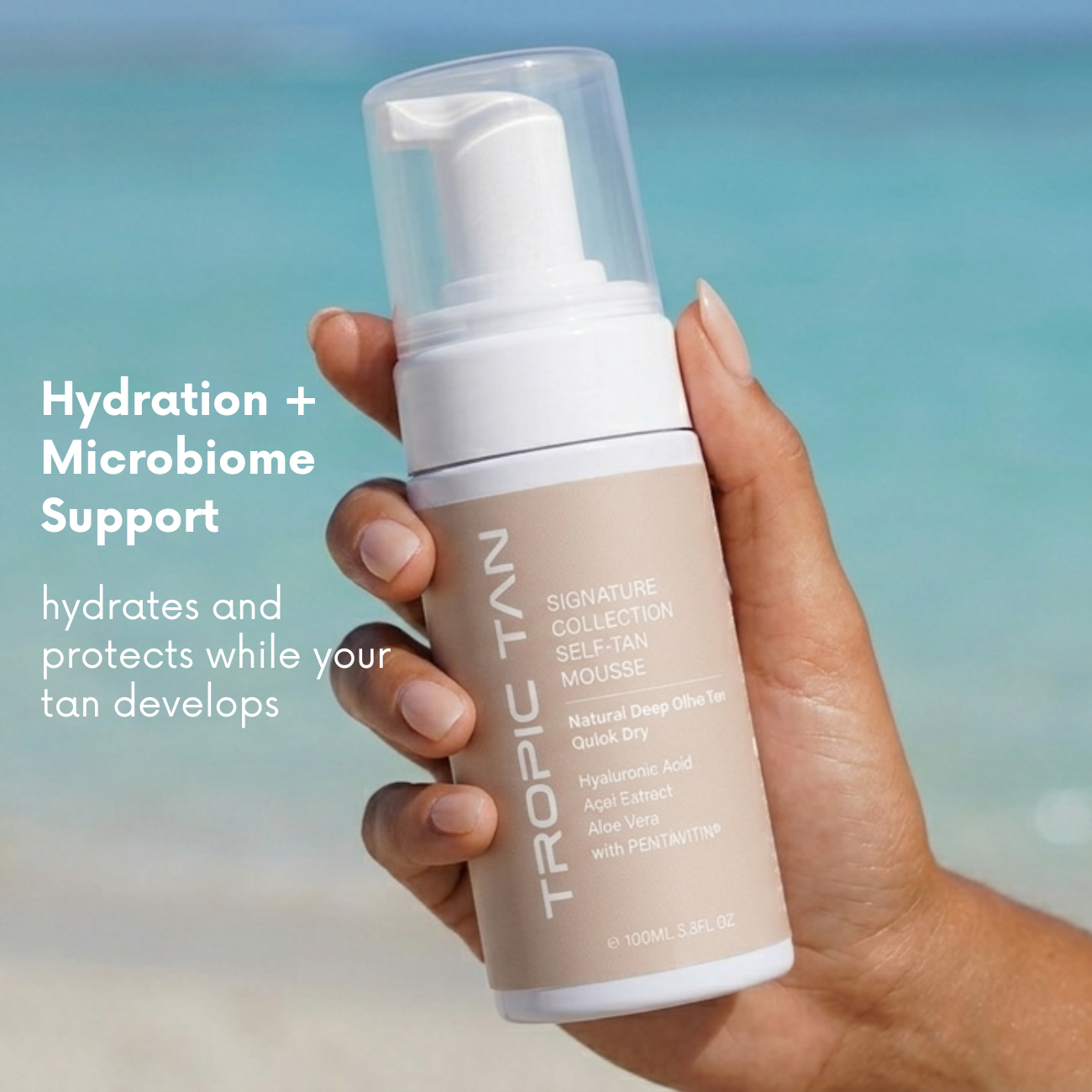
Instead of focusing solely on colour depth, modern formulas like Tropic Tan prioritise skin health and that changes everything.
1. Smarter DHA Blends
Modern self tanning products use balanced tanning actives rather than aggressive levels of DHA. This creates a more even tan and reduces the intensity of the reaction that causes odour. Did you know that Tropic Tan contains and ingredient called Black walnut, particularly the hull and extract which contains juglone, a natural compound that reacts with skin keratin to create a temporary deep brown stain acting as a natural self tanner.
2. Hydration Reduces Self Tan Smell
Well-hydrated skin reacts more evenly with DHA.
Ingredients like:
-
Hyaluronic Acid
-
Aloe Vera
-
Glycerin
-
Advanced hydrators such as PENTAVITIN®
help keep the skin comfortable, which significantly reduces the smell during tan development.
Dry skin = stronger smell
Hydrated skin = softer reaction
3. Skin Barrier Support
When the skin barrier is compromised, the tanning reaction can feel harsher and smell stronger. Modern self tanners include barrier-supporting ingredients that allow the tan to develop smoothly and naturally.
4. Odour-Neutralising Technology
Instead of masking the smell, newer formulas actively neutralise the compounds created during the tanning process preventing the scent before it starts.
Why Self Tanner Can Still Smell Sometimes
Even the best self tanner can smell stronger if:
-
Skin is very dry or dehydrated
-
Exfoliation was skipped
-
Too much product was applied
-
Heavy sweating occurs during development
-
Tight or synthetic clothing is worn immediately after application
These factors intensify the DHA reaction, not the product quality.
The Takeaway
Self tanning used to smell because formulas were harsh, dehydrating and focused only on colour.
Modern self tanners smell better because:
-
Skin hydration comes first
-
The skin barrier is protected
-
DHA is used more intelligently
-
Odour is neutralised, not masked
A good self tan today shouldn’t smell like self tan at all, it should just look like healthy, bronzed skin.